I.One Statistic. One Question.
At a recent WHO Global Traditional Medicine Summit in New Delhi, experts tested 25 commercially available ashwagandha formulations. Sixty percent of them contained leaf material, not root.
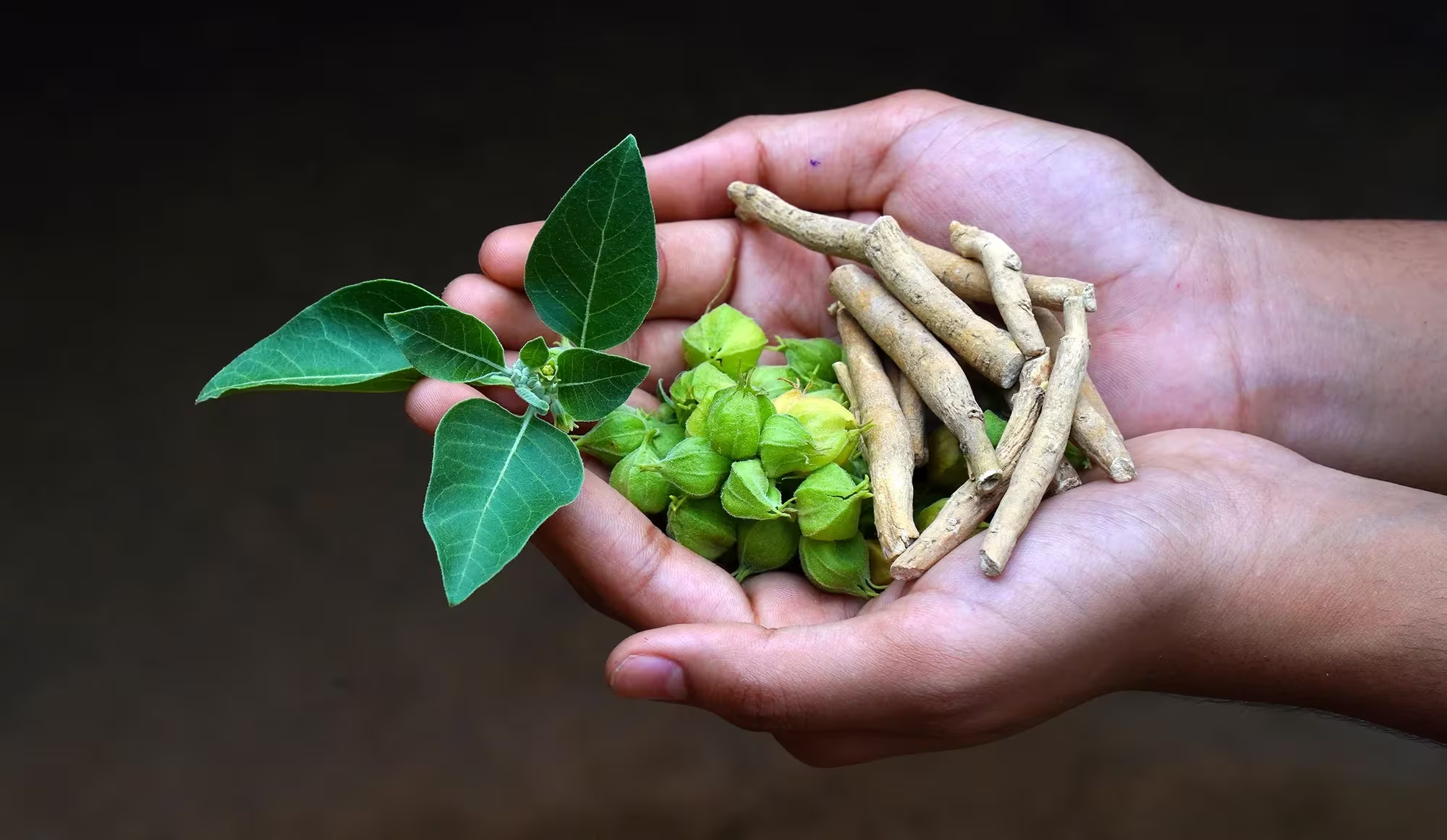
This is not a minor labelling error. The root is the primary medicinal part of Withania somnifera. Leaf and root carry different phytochemicals, different compounds, entirely different therapeutic profiles. India's Ministry of Ayush had already issued an advisory against using ashwagandha leaves in formulations. That memo sat in inboxes nobody checked.
The question this statistic forces us to ask is not: what is wrong with ashwagandha? The question is: how did a herb described with extraordinary precision in our classical texts end up misrepresented, misprocessed and misused at a global scale?
The answer is not in the plant. It is in us.
II.What the Samhita Actually Prescribed
Before we discuss what went wrong, we must return to what the texts actually say. Not what is claimed on supplement packaging. Not what circulates on wellness podcasts. What the Samhitas recorded.
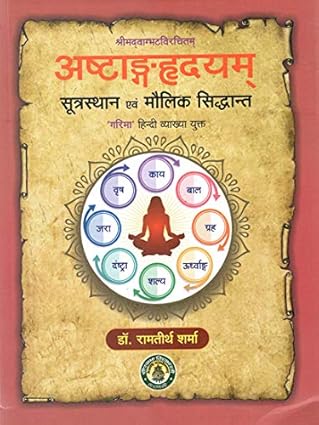
The most precise classical reference for ashwagandha as a single-drug preparation comes from the Ashtanga Hridayam, Uttara Tantra, Chapter 39, verse 157, a single verse in which four clinical constraints are embedded.
Four clinical constraints, encoded in a single verse.
The patient, krisha: the emaciated, depleted individual. Not the stressed professional, not the athlete seeking gains. The vehicle, payasa: milk, with ghee and oil as alternatives. Not a capsule, not cold water. The duration, ardhamaasa: fifteen days. A time-bound intervention, not a lifetime supplement. The preparation, ksheerapaka: boiling the herb in milk, a process that changes the pharmacokinetics of the active compounds entirely.
Single-drug use was never the default in classical practice. It was the exception, constrained by patient selection, preparation method, duration and supervision. The idea that any person can take ashwagandha in any form for any duration without a Vaidya's assessment has no classical basis whatsoever.
III.Three Places We Failed
The Industry
Producers extract active compounds from ashwagandha root into liquid concentrate, then dry the spent, depleted root and sell it as premium raw material. It looks authentic. It may carry certifications. But it is a hollow shell of what the text describes. Beyond adulteration, the classical step of shodhana samskāra (kshalana), purification and transformation of the herb before use, has been eliminated entirely from commercial production because it costs more, takes longer and cannot be scaled cheaply. The industry did not inherit the pharmacology. It inherited the brand name.
The Careless Practitioner
This is the hardest truth to write and the most necessary. A registered Vaidya who prescribes ashwagandha commercially, capsule, tablet, standardised extract, without establishing patient constitution, without proper preparation, without duration discipline, without follow-up, is not practising Ayurveda. They are practising in the name of Ayurveda. Ashwagandha is ushna virya, laghu and snigdha in guna. In a pitta-dominant patient, in someone with compromised liver function, in someone on concurrent hepatotoxic medication, this is a contraindication the Samhita implies through its specificity of indication. When adverse events follow, the discipline takes the blame.
The Consumer Culture
Ayurveda never said herbs are safe. It said the right herb, in the right preparation, for the right patient, at the right time, under the right guidance, is medicine. The assumption that "natural" equals "harmless" is not Ayurvedic philosophy. It is a marketing construct. Taking ashwagandha daily because a podcast recommended it, with no dosha-dhatu-avastha assessment and no Vaidya, is not Ayurvedic self-care. It is gambling with a pharmacopoeia that took centuries to build.
“We did not lose the herb. We lost the discipline to use it.”
IV.Return to Precision
Ashwagandha is one of the most carefully described herbs in the entire classical pharmacopoeia. The Samhitas gave us the patient type, the preparation method, the vehicle, the duration, and, through specificity of indication, the contraindications. This was not vague wellness wisdom. It was clinical medicine, encoded in verse, preserved across centuries.
The industry monetised a sacred pharmacopoeia without inheriting its rigour. Careless practitioners prescribed by trend rather than text. Consumers treated a system of medicine as a grocery list. And a herb that harmed no one used correctly became a symbol of everything that goes wrong when tradition is stripped of its precision and sold as convenience.
The herb isn't failing. We are. And the path back is not a better supplement. It is a return to the Vaidya, to the text, to the preparation, to the patient and to the humility that classical medicine always demanded from those who practice it.