AboutMedicinal BotanicalsVraksha ShilpaHydroponicsKrishi ShastraBiovedhaEnquire
Home / Ecosystem / Vraksha Shilpa

The art of living groves.

Sacred and ecological garden design, with the right species, not whatever a landscaper can find. We specify, source and grow the exact plants a space needs, because the nursery and the farm sit behind every design we make. This includes medicinal plant gardens, native flowering species, pollinator-supporting habitats and three-season planting designs that keep the space ecologically active across the full year.

Designed with correct species & ecological function.

Most landscape designers work from what's available at the nearest nursery. We work the other way, starting with what the space ecologically and traditionally requires, then growing or sourcing exactly that. Nakshatra vana, Navagraha vana, temple greening, vastu gardens, medicinal home gardens and native flora and seasonal gardens, each designed with botanical precision, not aesthetic approximation.

Nakshatra vanaTemple greeningHealing gardensVastuNative speciesSeasonal gardens
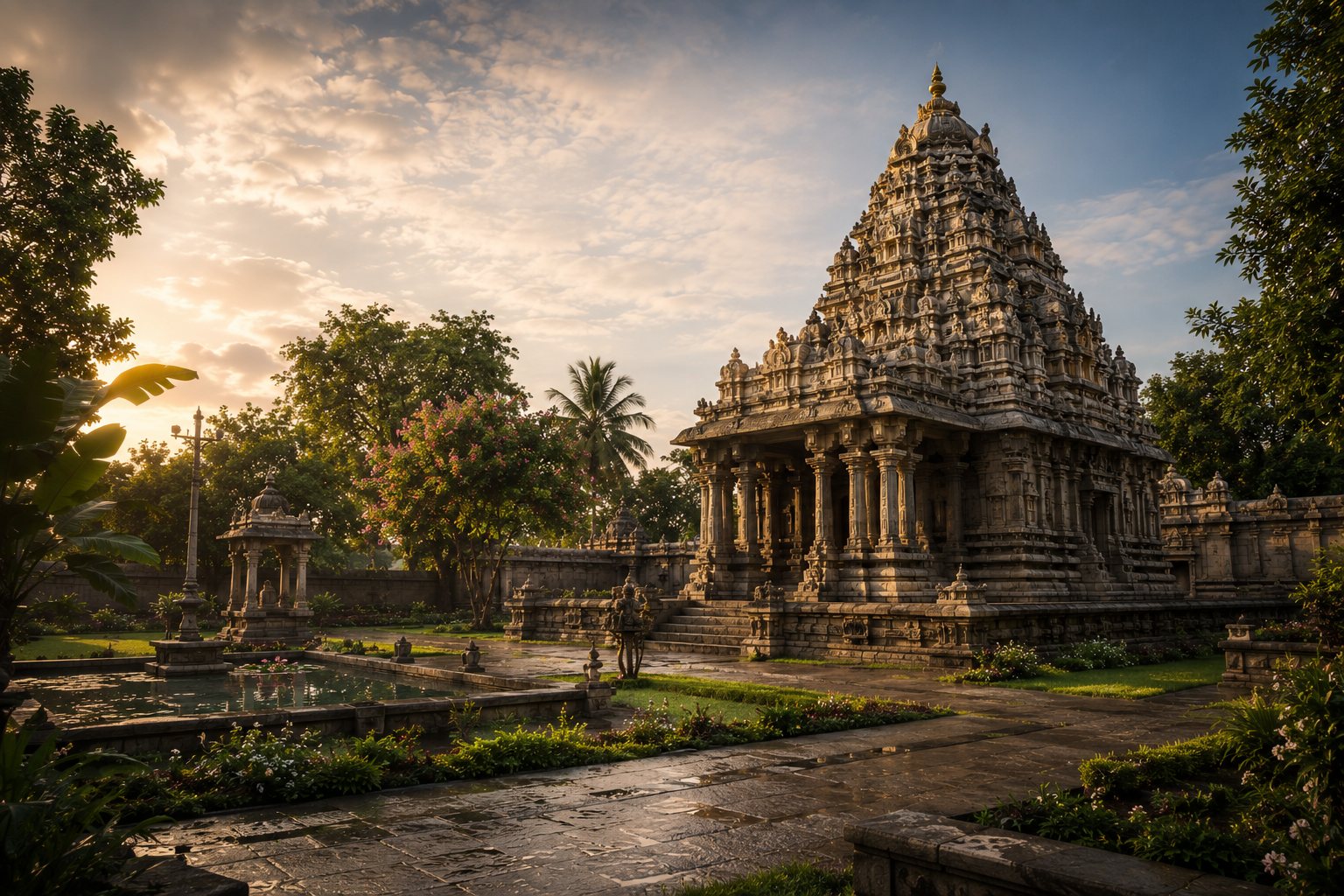
South Indian stone temple at golden hour with a designed grove, lotus pond and flowering canopy

From sacred groves to soil systems.

Sacred grove design

Nakshatra vana, Navagraha vana, temple greening, vastu gardens and medicinal home gardens, correct species, traditional knowledge, ecological function.

Medicinal & healing gardens

Purpose-grown gardens for wellness centres, Ayurvedic hospitals, residences and institutions. Plant selection based on therapeutic use, climate and spatial context.

Native flora, fauna & seasonal gardens

Gardens designed around native flowering species, pollinator habitats and three-season planting cycles, so the space is alive across the year, not just at one peak moment. Species selected for regional nativity, ecological function and medicinal value where applicable. Not ornamental planting. A garden that works as a small ecosystem.

Landscape & campus greening

Institutions, wellness resorts, schools and private estates, designed as functioning ecological spaces rather than decorative ones. Species selected for canopy, microclimate, soil biology and long-term stewardship, not just appearance.

Plant nutrition science

Precise nutrition planning for medicinal species, understanding what a plant needs at each stage to produce potency, not just biomass.
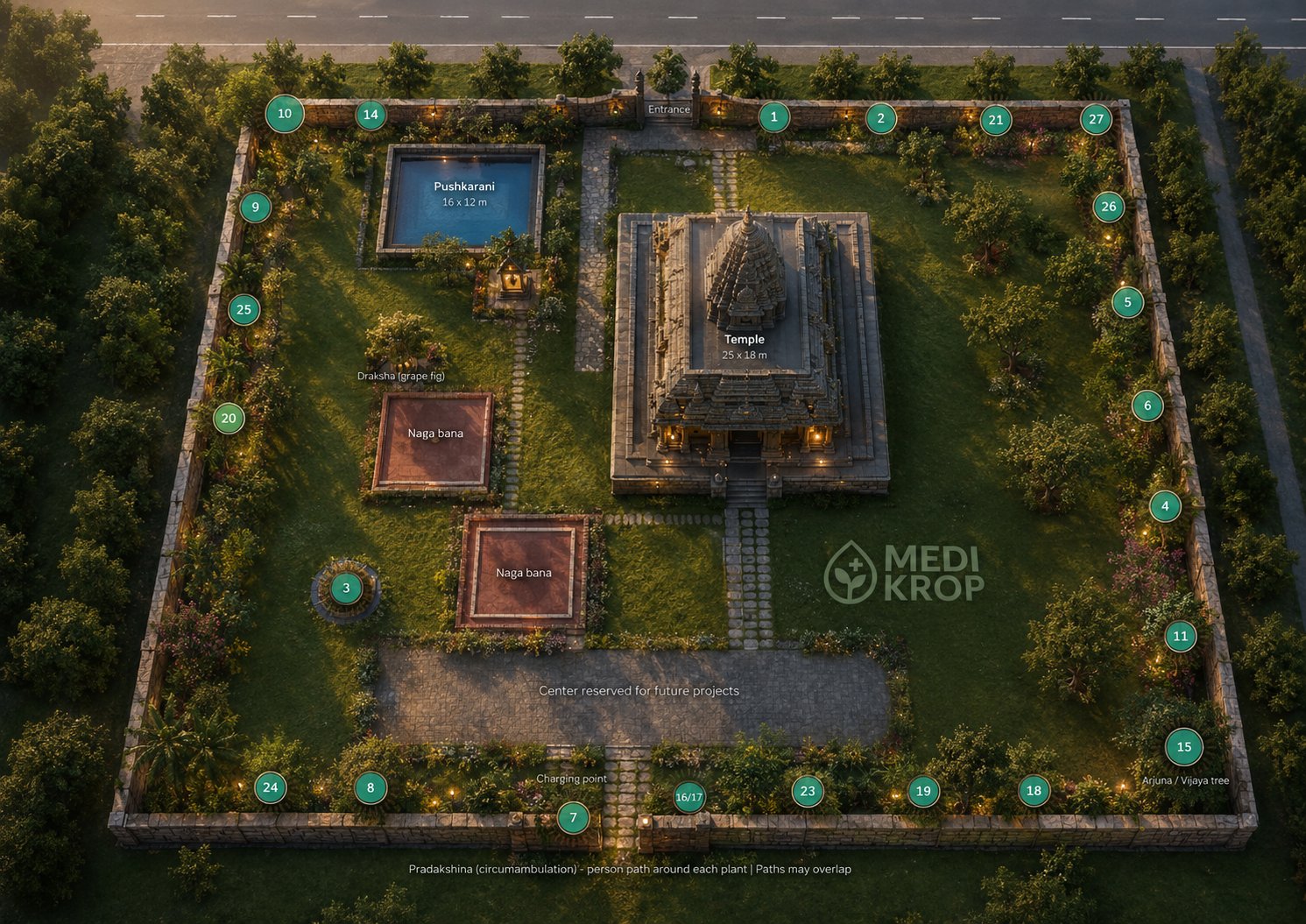
Every plan, as a living 3D blueprint.

For a recent temple commission we mapped the entire sacred planting, temple, Pushkarani, Naga bana groves and 27 authenticated species, into an explorable wireframe model.

Rotate it on every axis, zoom into the pradakshina paths and read each plant's placement. Every commission begins with a species brief, a documented list of what will be planted, why and what ecological and traditional function it serves. This is how we hand a design to a client: not a flat drawing, but a model you can walk around.

Explore the 3D blueprint
MediKrop temple grove plan, aerial 3D render showing temple, Pushkarani, Naga bana groves and 27 numbered authenticated plant species
Launch interactive model →
“Temples should be cool canopies, not scorching stone plazas. Every sacred space deserves a living grove.

The rest of the organism.

All five pillars

Designing a temple grove, institutional garden, or ecological landscape?

Tell us about the space, its purpose and any traditional or ecological requirements, whether that is a temple grove, a medicinal garden, a native flora planting, or a seasonal garden designed to support local fauna. We will respond with the right species and the science behind them.

Commission a design